
Recommended plan: Start at Season 1, Episode 3 — around 11 minutes in length.
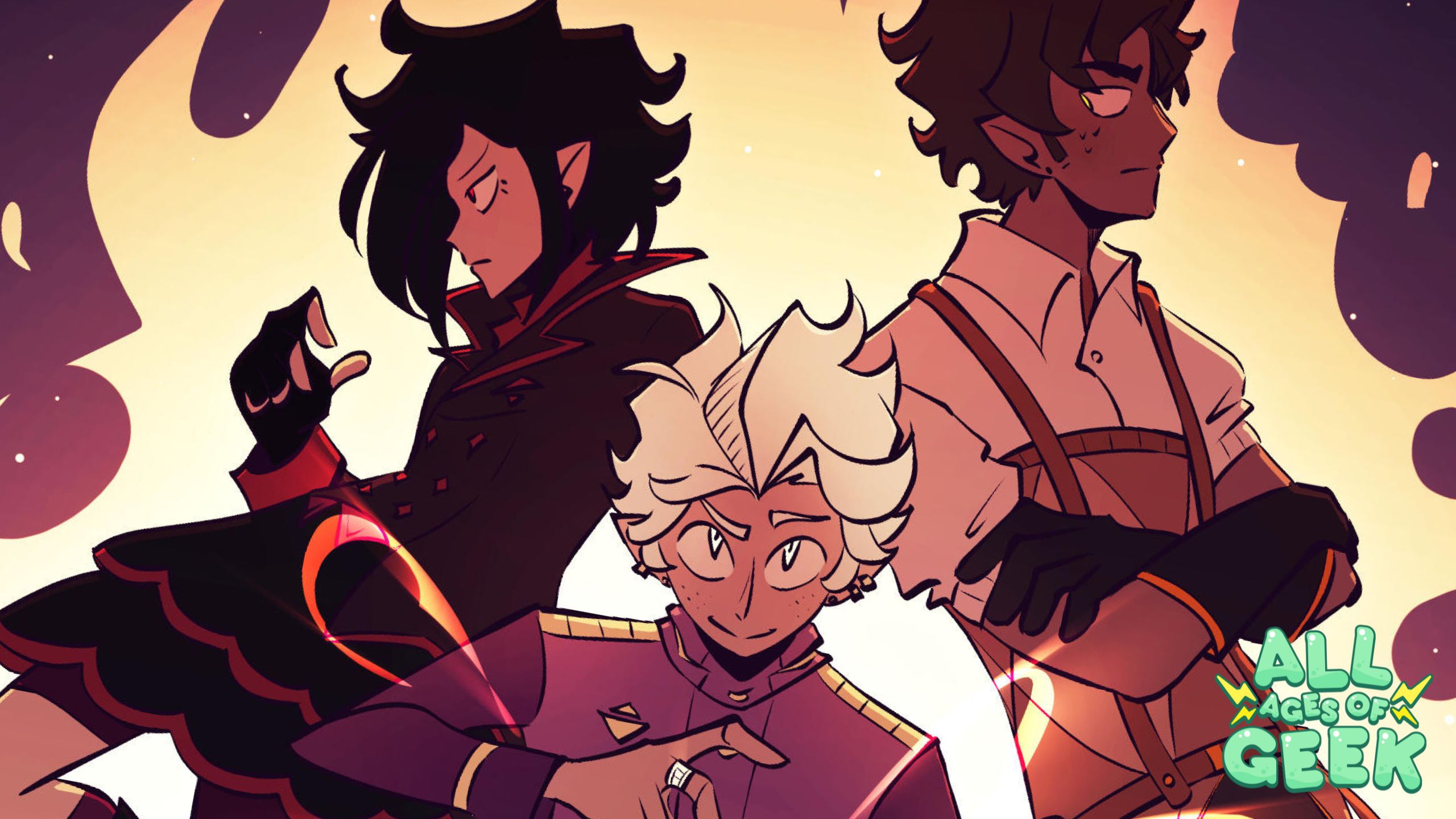
This installment offers a focused emotional payoff, introduces protagonist Mira, reveals a villain shift, sets the visual color scheme, and establishes distinctive sound patterns.
When time is short, begin with S1E3, then follow with S1E1 for foundational context.
Season one features 10 compact segments; runtimes fall between 9–14 minutes.
First aired: September 2023; available on Netflix.
Average user ratings: 7.8/10 on IMDb, 89% audience approval on Rotten Tomatoes.
Behind-the-scenes notes: episode format prioritizes fast recurring sequences, abundant physical comedy, and multi-layered background elements that pay off with multiple watches.
Watching suggestions: Wear headphones to perceive deep sound cues;
turn on subtitles for quick exchanges;
pause at 6:12 mark in S1E3 to study a key visual reveal.
For enhanced character comprehension, track Mira’s narrative through S1E3, S1E6, and S1E9;
note time markers for recurring elements: 00:45, 04:32, 10:58.
Bottom line: For those with limited availability, dedicate two 12-minute periods to absorb key themes;
for those seeking richer context, set aside an intense 30-minute session focused on S1E3 plus adjacent entries for connective payoff.
Digital Circus Deconstructed: What Makes It Special?
Start with episode one using English subtitles;
concentrate on character moments, visual references, and audio design signals.
- Hybrid animation: 3D models with cel-shading, rapid camera cuts, intentional frame-skips that mimic classic slapstick timing.
- Mood opposition: vibrant environment colors contrasted with disturbing conversation, recurring atmosphere changes within individual sequences.
- Runtime: average 9–12 minutes per installment, compact storytelling that prioritizes beat economy.
- Sound craft: soundtrack mixes chiptune motifs, punchy percussion; silence used as a rhythmic tool for tension release.
- Visual themes: character clothing with distinct color schemes, mirror reflections, repeated environmental symbols appearing across episodes indicating story connections.
- Story framework: episodic exterior conceals complex serialized components; embedded secrets pay off with re-watching and careful scrutiny.
- Developer markers: closing frames regularly include small indicators; official statements reveal production insights that validate or invalidate community assumptions.
Recommended playback settings:
stereo headsets, full-screen mode with standard resolution;
activate subtitles for lyric comprehension and comedic timing.
- Replay significant moments at quarter speed to follow motion pacing;
- halt per frame to catch blur illustrations, swift edits, and duplicated materials.
- Extract audio tracks or instrumental versions to chart recurring themes throughout episodes;
- document timecodes for motif reappearance.
- Compile color collections utilizing image capture applications by character, compare between segments to monitor emotional transitions.
- Examine final frames, posted descriptions, and subtitle files for concealed words or time markers connecting sequences.
- Follow official developer platforms for exclusive content;
- development insights explain workflow decisions, software tools, and team member responsibilities.
Primary uniqueness emerges from fusion of energetic scene composition, brisk pacing, exacting sound design, and interwoven continuity that repays close inspection more than superficial viewing.
The Core Idea of Digital Circus Episodes
View the initial three episodes in broadcast sequence to understand fundamental structure, rhythm, and repeating patterns.
Typical duration 11 minutes per segment; premiere episode lasts 22 minutes.
Installment lengths range from 7 to 15 minutes throughout the first season; transitional mini-episodes are 1 to 3 minutes.
Optimal viewing block: 4–5 episodes consecutively to maintain narrative continuity without tiredness;
rest for ten minutes after each 45-minute block.
Production process integrates 3D character designs with 2D surface treatments; cel-shading and movement blur applied purposefully.
Standard frame rate is 24 frames per second for movie-like shots, 30 frames per second for rapid comedic sequences.
Color grading shifts per chapter: warm tones for comedic scenes, desaturated palette for tense beats.
Musical score depends on electronic synthesizer themes connected to individuals; character melodies reappear every 30 to 90 seconds to indicate atmosphere changes.
Conversation recorded at 48 kHz; final audio mixed to -6 dB LUFS for digital streaming services.
Narrative design features multi-level constructions: apparent comedy covers serialized uncertainty; each installment uncovers one piece that transforms prior meaning.
Figure progressions conform to three-part brief design per installment: framing, deviation, outcome.
Considerable attention to impact: choices generate permanent alterations to the mutual space across multiple installments.
Enable subtitles to catch visual puns embedded in caption files;
freeze at designated time markers provided in installment annotations for frame-level analysis.
Monitor repeating symbols using table with categories: time marker, icon, possible interpretation, and verification against producer observations.
For completists: download published score tracks in lossless 44.1 kHz resolution when provided;
keep standard image proportions while preserving to prevent motion abnormalities.
Signature Elements of Digital Circus Presentations
Give priority to under 100 millisecond total system delay: strive for 40–80 ms control-to-display responsiveness for interactive portions;
calculate network travel time, processing intervals, and compositing latency independently.
Instantaneous visualization: utilize Unreal Engine or Unity featuring hardware ray tracing and temporal upscaling technology (DLSS/FSR) to achieve 4K60 with intricate surface properties;
allocate 6–8ms GPU time per frame for primary render, 2–4ms for post-processing.
Motion capture standards: body suits with inertial sensors like Xsens or Rokoko for unconstrained movement with typical position discrepancy of ±10–20 mm;
optical solutions including Vicon and OptiTrack for production-quality monitoring with precision within 1–3 mm;
record at 120–240 Hz for fluid motion adaptation.
Sound architecture: employ Ambisonics third-order for three-dimensional sound positioning, convolution reverberation for environment modeling, and integration software like FMOD or Wwise;
target audio-to-visual sync <10ms;
furnish split audio tracks in 24-bit 48 kHz format and an extra mix for high dynamic range imagery.
LED stage and projection parameters: pixel density P1.9 to P2.6 for detailed shots, luminosity 800 to 1,500 nits, refresh rate 240 hertz, synchronization with SMPTE timecode for frame coordination;
adjust color accuracy using spectroradiometer equipment and employ individual screen color lookup tables.
Interactive framework: WebRTC for under 100 millisecond input routes, WebSocket or MQTT for delayed messages;
server components: Node.js or Go for signaling, Redis for ephemeral state, and edge instances for user affinity;
design balanced 100 Mbps connection for every operational device when accommodating multiple parallel feeds.
Content and color processing: store VFX passes as EXR (32-bit float), transfer animated geometry via Alembic, adopt ACEScg for linear mid-process color, and deliver Rec.709 SDR plus PQ HDR masters;
maintain consistent LUT chain across render and LED playback.
Production and testing guidance: allocate responsibilities: real-time technology coordinator, movement capture specialist, sound manager, effects artist, communications engineer;
run three full dress rehearsals with simulated load up to 200 concurrent users, log packet loss, jitter, frame drops;
tolerate transmission loss less than 0.5% and latency deviation below 20 ms for dependable performance.
Questions and Answers:
What defines Digital Circus and who are its creators?
Digital Circus is an animated production following a group of eccentric individuals isolated in a surreal entertainment arena.
The atmosphere combines rapid humor, physical jokes, and occasional darker comedic moments, presented in brief episodes that focus on timing and personality traits.
The popular indie series was developed by a small creative team at an independent animation studio and combines hand-drawn expressions with digital effects to create its distinctive look.
How do episodes function — independent stories or connected narrative?
Most episodes function as self-contained sketches that focus on one situation or gag, which makes them easy to watch out of order.
At the same time, there are recurring character arcs and running jokes that accumulate across the season, so viewers who follow every episode will notice deeper developments and callbacks.
Scriptwriters frequently employ quick memory sequences and brief linking moments to establish story consistency without making each segment a dense narrative piece.
Which episodes should I watch first if I’m new to the show, and why do they work as introductions?
Begin with the pilot: it sets up the premise, introduces the main cast and shows the popular indie series’ tone in a compact package.
Afterward, watch a segment highlighting the protagonist’s history or early major error — these installments offer emotional insight and strengthen later comedic impact.
I also recommend a music-heavy episode and one that highlights the ensemble together;
the first illustrates the program’s inventive application of audio and rhythm, while the second reveals how varied characters engage under stress.
Ultimately, see the season’s central episode that combines several brief story elements;
it offers a strong impression of the program’s narrative aspirations without needing familiarity with all previous content.
In what ways do the artistic style and sound production contribute to the storytelling?
The visual technique matches amplified character motion with precise, complex environments so that movement and expressions deliver significant comedic content.
Color arrangements and lighting adjustments signal tone changes, shifting from brilliant, energetic passages to darker, constrained moments.
Sound production is extremely deliberate: clear audio effects highlight unexpected beats, and the music changes between dynamic patterns and softer layers to align with tempo.
Vocal guidance maintains energetic deliveries, which assists brief episodes in achieving emotional resonance despite their short duration.
Does Digital Circus target children or is it intended for older viewers?
The show operates on two levels.
On the surface it has slapstick and visual humor that younger viewers can enjoy, but the scripts also include satirical references, meta-humor and moral ambiguity that resonate with teens and adults.
Parents should be aware of occasional darker jokes and mild language;
review episode summaries if you wish to preview particular segments beforehand.
Overall, the show is most fulfilling for viewers who appreciate comedy with multiple dimensions that can be experienced differently at various stages.